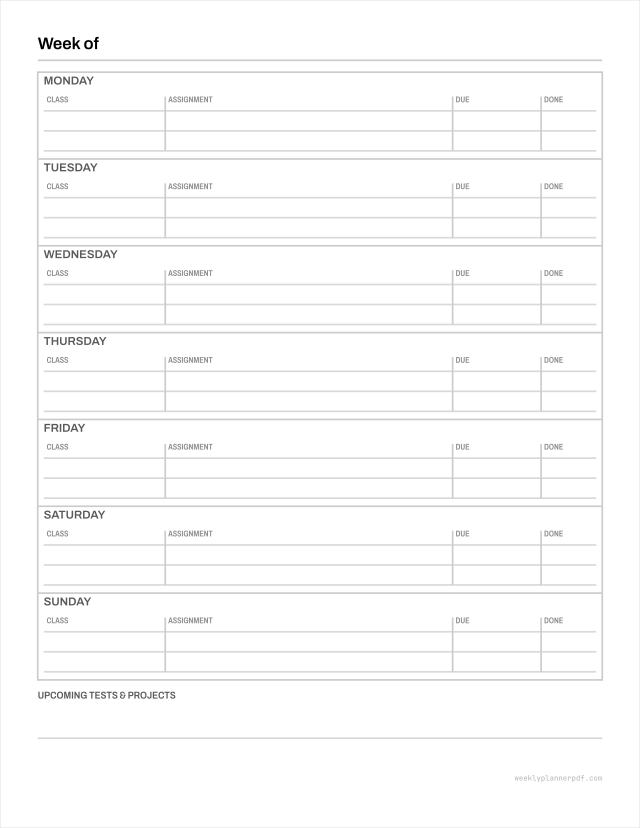
Bill payment tracker
Fixed bills with due dates and a tick, kept separate from variable spending because the two need completely different treatment.
Paper size
No signup. No email. No watermark. No limits.
- Page box
- 215.9 x 279.4 mm 612 x 792 pt
- Margins
- 12.7 mm all sides
- Writing rows
- 7.5 mm
- Colour
- DeviceGray, rules at 20% K
- Scaling
- Prints at 100%, Actual size preset
Other versions: Sunday start, 2-up and trim-mark sheets
Bills are not spending
A fixed bill has a due date, a known amount and exactly one decision attached to it, which is whether it has been paid. Variable spending has none of those. Mixing them on one sheet means the bills get lost among the coffees.
Four columns is enough: what, when, how much, paid. The paid column should be a box to tick rather than a line to cross out, because on a sheet somebody else might check, a tick reads unambiguously.
What it is good for
Catching the ones that are not on direct debit, which are the ones that generate late fees. Also useful when several bills land in the same week and the order matters.
If you want to track where the variable money goes, the weekly budget planner is the other sheet, and the two work well side by side.
Also known as
This layout is searched for under several names, and they all describe the same file: bill payment log printable, monthly bill tracker pdf, bill due date checklist printable. One page, one grid.
Related
- Weekly budget planner
Variable spending, which needs a different shape
- Weekly to do list
If it is only a handful of bills