Undated weekly planners
Every layout with no year printed on it. Start in March, skip a fortnight, print one a week for as long as you like. They do not expire.
No signup. No email. No watermark. No limits.
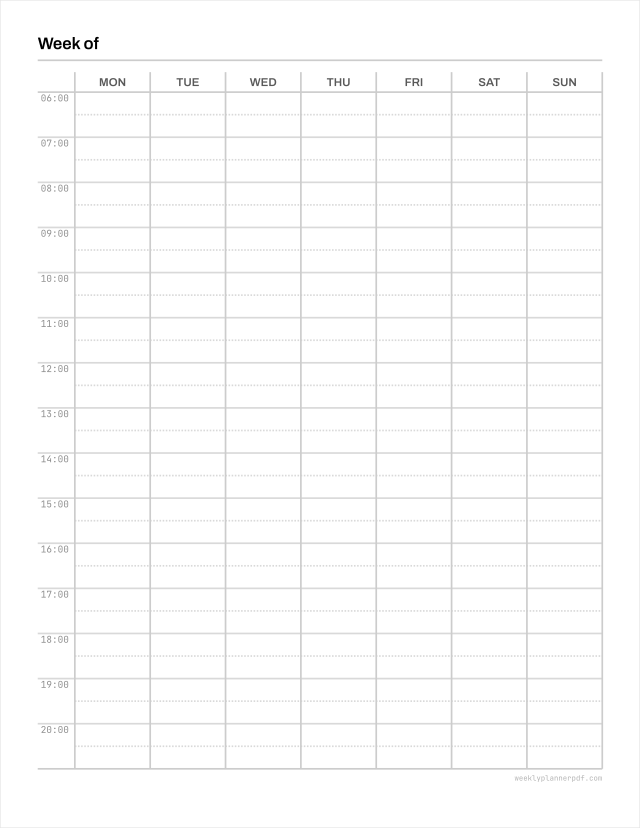
Hourly weekly planner
Seven day columns against an hour rail, so you can see where the week actually goes.
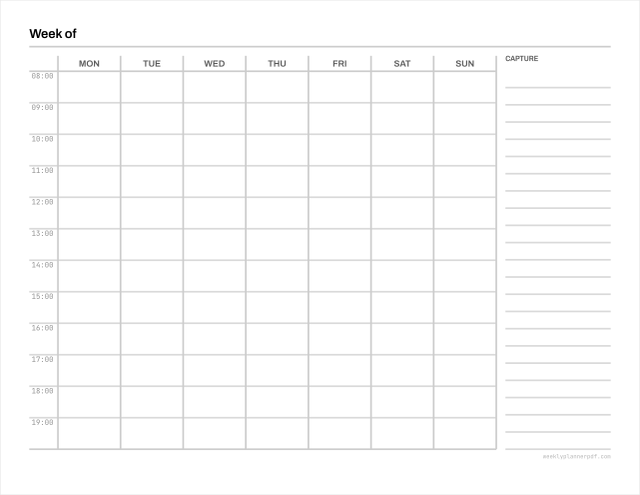
Weekly time blocking template
An hour grid with a full-height capture column beside it.
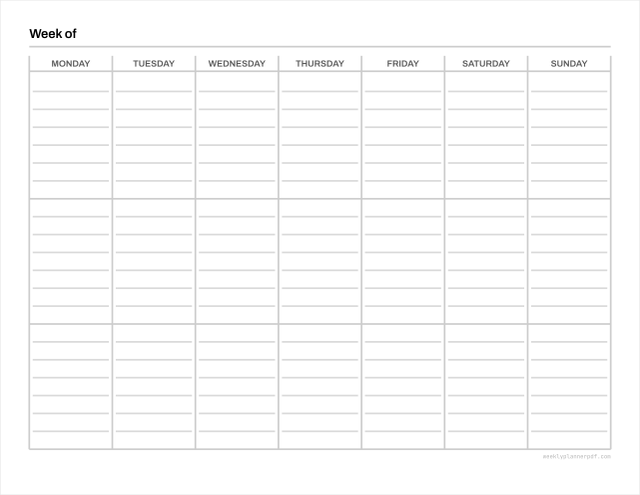
Vertical weekly planner
Days as columns, three boxes each for morning, afternoon and evening.
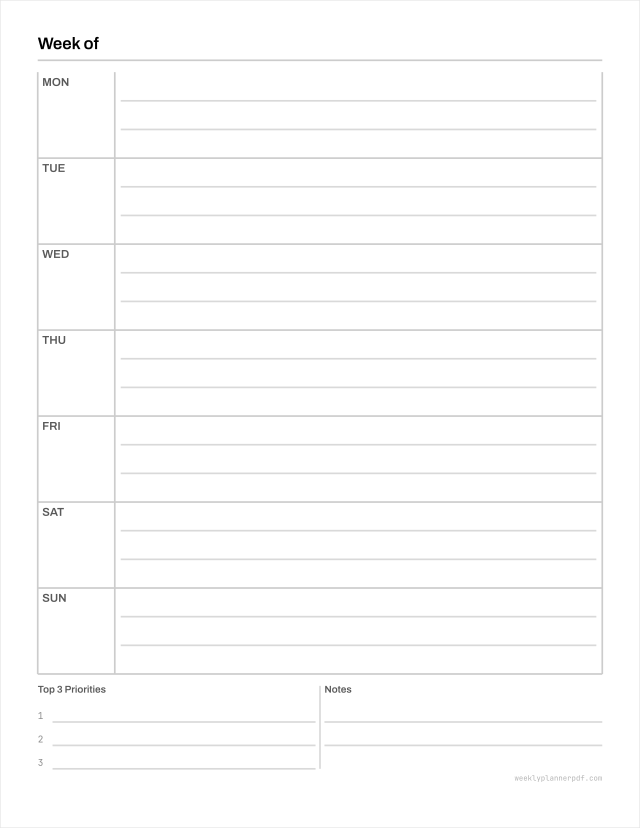
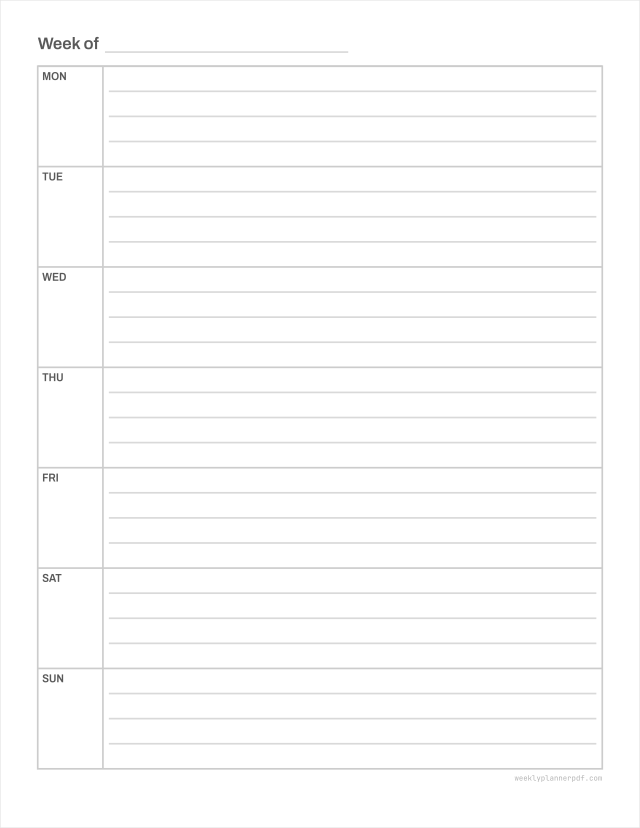
Horizontal weekly planner
Days as rows, each one running the full width of the page.
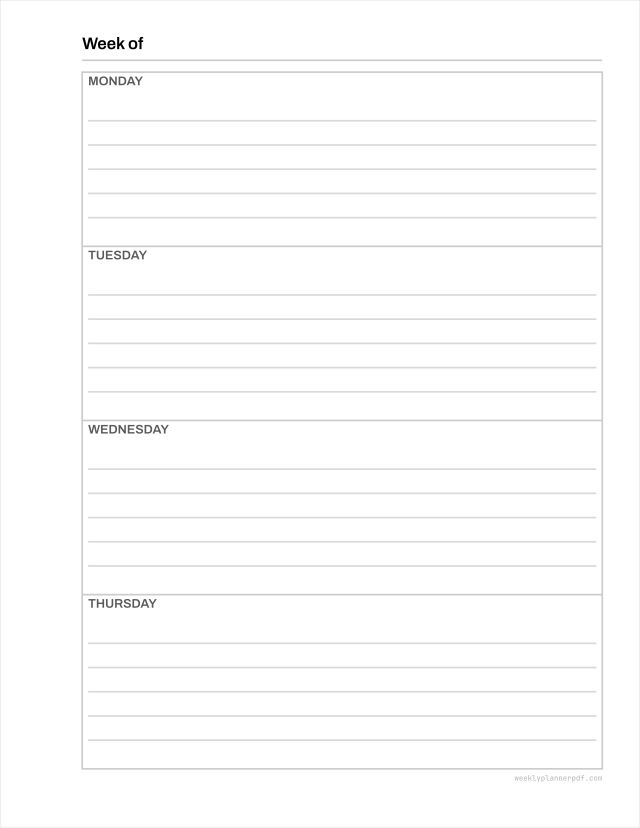
Two page weekly planner
The week across a facing spread, which is the only way to get six or seven writing lines a day.
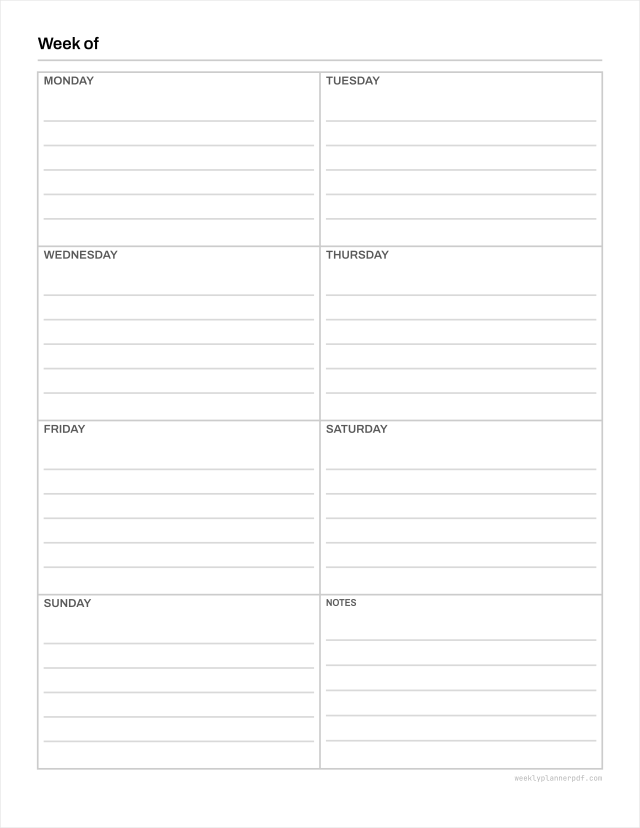
One page weekly planner
Seven day boxes and a notes panel on one sheet.
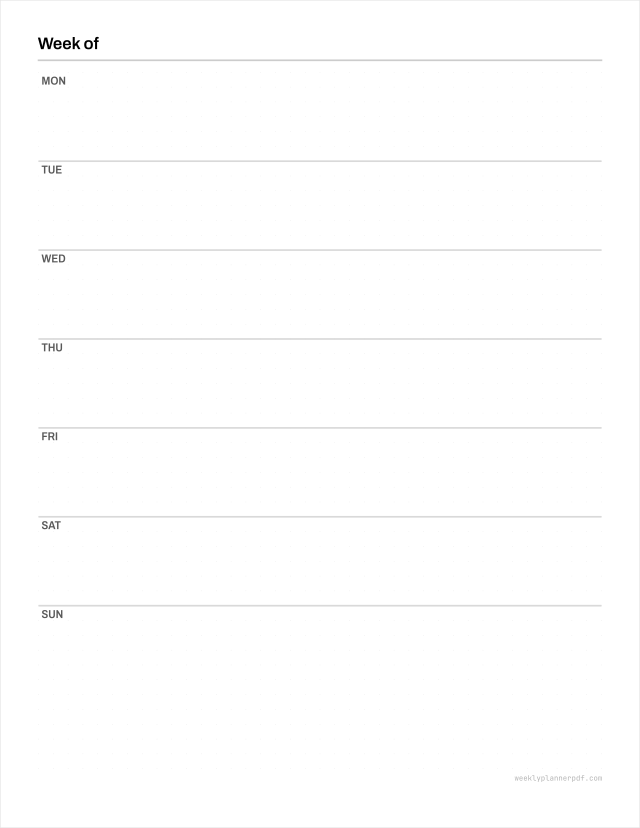
Blank weekly planner
No dates, no hour column, no printed section headings.
Bullet journal weekly spread
A 5mm dot grid with the lightest possible day structure.
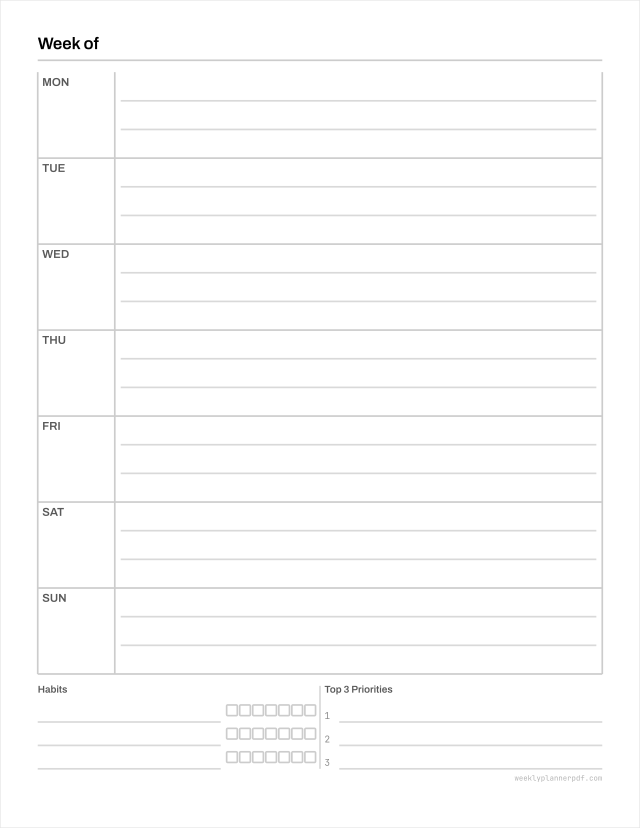
Weekly planner with habit tracker
The weekly grid with a habit row block attached, so the thing you are tracking sits on the same sheet as the week it happens in.
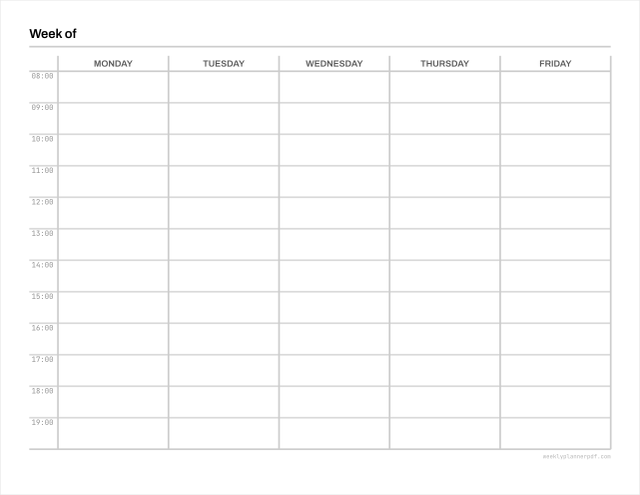
Weekly schedule template
A schedule rather than a planner: fixed recurring commitments laid on an hour grid, five days or seven, for rotas, classes and anything that repeats.
Why undated is usually the better choice
The paid planner market depends on you rebuying every December. Only one of the eleven planners in one major note-taking app's own 2026 roundup was undated, and that is not an accident: a dated product has a built-in repurchase date. An undated file removes the mechanic entirely, which is precisely why the paid market does not lead with it.
Practically, undated wins whenever your planning is not continuous. Nobody plans all fifty-two weeks of a year. If you print a sheet on the Sunday you actually intend to plan, an undated file wastes nothing, while a bound dated planner accumulates blank pages that read as failure.
When dated is worth it
When you want the whole year in one file, bound and done. Dated saves you writing fifty-two week ranges and guarantees the days land correctly, including in the years that have fifty-three ISO weeks. The 2027 planners are there for that.
The generator will also emit any specific week, month or date range you name, so you are not choosing between a blank sheet and a whole year.
What undated actually means here
No year, no dates, and a ruled line where the week range goes. Day names stay, because a week still has an order and you choose whether it starts on Monday or Sunday.
If you want the day names gone too, the blank weekly planner is genuinely empty: no dates, no times, no printed section headings.