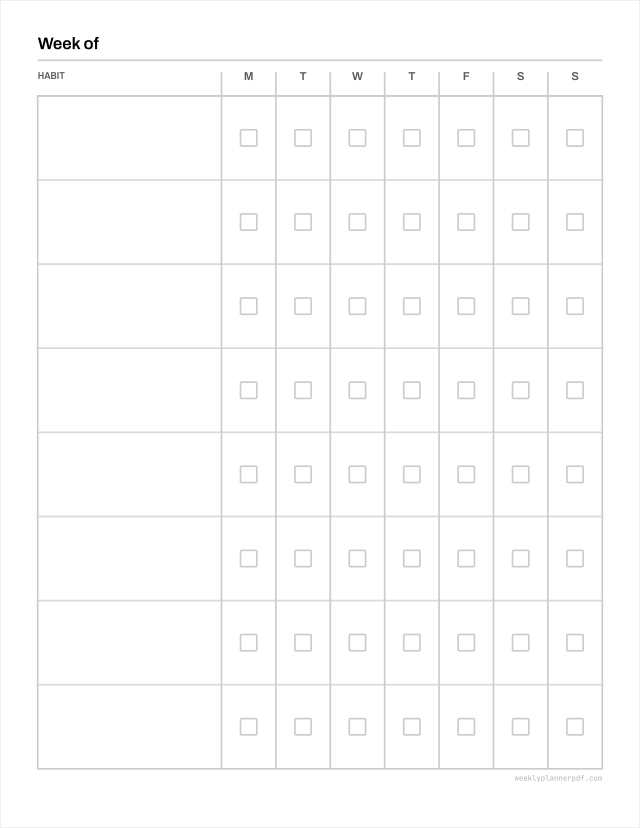
Weekly mood tracker
A week of days with space for both how it felt and what happened, because a rating on its own tells you very little later.
Paper size
No signup. No email. No watermark. No limits.
- Page box
- 215.9 x 279.4 mm 612 x 792 pt
- Margins
- 12.7 mm all sides
- Writing rows
- 7.5 mm
- Colour
- DeviceGray, rules at 20% K
- Scaling
- Prints at 100%, Actual size preset
Other versions: Sunday start, 2-up and trim-mark sheets
A number on its own is not data
A row of scores out of ten is easy to fill in and almost useless a month later, because you cannot remember what a four on the eleventh referred to.
One line of context per day changes that. Slept badly, long meeting, walked in the afternoon. That is what makes a pattern visible, and patterns are the only reason to track anything.
Weekly rather than monthly
A monthly grid is thirty-one small cells and a gap in week one that sits there for the rest of the month. A weekly sheet resets, which is both more honest and easier to keep up.
A5 is a good size for this one: large enough to write a line of context, small enough to keep somewhere private.
What this is not
It is a blank recording grid. There is no scale, no interpretation and no guidance, deliberately, because a printable sheet is not the right place for any of those.
If you are tracking mood because something is wrong, a record of a few weeks is genuinely useful to bring to someone qualified. It is not a substitute for talking to them.
Also known as
This layout is searched for under several names, and they all describe the same file: mood chart printable, daily mood log pdf, weekly feelings tracker printable. One page, one grid.
Related
- Self care planner
Five areas rather than a single rating
- Weekly habit tracker
For behaviours rather than feelings